
 Tri-comb(tm) Panel Core Structures were created to facilitate mass production of economical, high-performance panels. The real world applications are vast. Substantial savings in weight, materials, shipping and production costs are all simultaneously possible when Tri-comb(tm) replaces conventional panels or even honeycomb. Tri-comb(tm) opens up new possibilities for better LEED compliant building materials.
 Solar Powered Electric Recumbent Trike
 Agira's micro-optics technology traps and accumulates sunlight incident from multiple angles of the sun inside a static glass panel. This product delivers high intensity light to the edge of the glass panel where solar cells can be attached to produce power. Because our patent-pending optics reduces active solar cell requirement to 1-2%, it enables distinct advantages of 60% lower cost, 30% higher power conversion efficiency, and 50x increase in module manufacturing capacity.
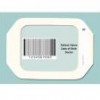 A polymeric film which can be transparent, semi-transparent or opaque, that consists of the polymeric film and a backing of some sort that adheres to the skin of the patient, but can be easily removed to reposition and re-adhered if necessary. The film, contains patient identification, including currently available information (name, date of birth, doctor, etc.), a barcode or other scanner-readable markings that are permanent in nature, which contain the patient information, but due to its encrypted nature through the use of a barcode or other, maintains the patient's confidentiality.
 Hearing news about drownings at the Caspian Sea (north of Iran), we thought of finding a solution of saving human lives at sea. For solving the problem, as the first step, we developed a surface rescue robot at RTS Lab. After manufacturing and testing it successfully, we thought of building a robot with higher capabilities that could act quicker and more accurate in rescue missions and we came up with the Pars aerial rescue robot idea.
 Imagine you are an explorer and you are exploring in a deeper forest or a cave. Isn't it helpful if you have a map of that area? Well, our mapper provides you with a 3D map of the area. The idea of Mapper is to provide an automatic map/route developer robot based on laser scanning of the area. The main principle behind this technique is an obstacle avoiding aerial robot with laser scanning ability.
 Currently, manufactured parts are inspected with a device known as a Coordinate Measuring Machine (CMM). These machines use an electronic probe tipped with a ruby or ceramic ball. The probe presents the ball in motion (via mechanical elements driven by servo motors) at a precise vector to the surface of the part and records the timing, intensity and deflection angle of that ball to determine the exact point at which the probe makes contact with the part under inspection. The probing points are recorded in specialized software and the measurements are calculated by interpreting the points and extrapolating what the surface of the part may be like from that data.
 A critical step in the purification process is the removal of excess solvent to provide a pure product for chemical analysis and subsequent use. The rotary evaporator is a basic tool for removing excess solvent.
 This project "AUTOMATIC GLASS WALL CLEANER" focuses on cleaning of glass wall buildings. Cleaning glass of such tall buildings is a time consuming and a dangerous job. Presently humans are employed for cleaning such tall glass buildings which is very dangerous. In order to provide a solution to this problem, this process of cleaning can be automated. This setup is capable of climbing and moving along the walls of the building without any human intervention. Necessary means of cleaning the glass wall under the setup are made so that the setup cleans the glass while moving over it.
 The intrinsic speed and precision of the human ocular-motor system makes the eye an ideal pointing device for human-machine interface. Eye tracking has not yet been exploited as a robust human interface with computers due to many technical problems, such as viewing a human face under real-world conditions, robustly identifying the eyes over a diverse population range, and the complexity of the real-time image processing tasks involved. Conventional high-accuracy (<1º of visual angle) eye tracking systems require the presence of an operator and/or require the user to use a chin rest or wear an identifying marker so the eye tracking system can find the user's eyes.
 Fuel cells are the future power sources of automobiles and other electrical appliances. In manufacturing of fuel cell platinum coating is an important process to achieve high efficiency in performance of the fuel cell. This coating process is key in achieving efficient output from fuel cell.
 New methods and apparatus comprising robust architectures capable of performing active or passive space debris collection/mitigation protocols are described. Systems for a solar-powered propulsion system used in combination with self-contained, remotely controlled space debris collection modules (SDCM's) with brake-sail apparatus to affect apsis of debris and particulates are discussed. Protocols for protection of installations, e.g., ISS, space hotel structures and space craft are advanced. New methods for employing detection/avoidance protocols and disclosure of newly-designed space debris collection modules ('SCDC's) for mitigating space debris in earth's atmosphere are disclosed.
 Library plays a vital role in the development of any country. In most of the Libraries, the stock verification is done manually and it is very difficult too; of course, it consumes more time and human resources.